2026-10-11 ·
Hail Damage vs. Normal Wear: How to Tell the Difference
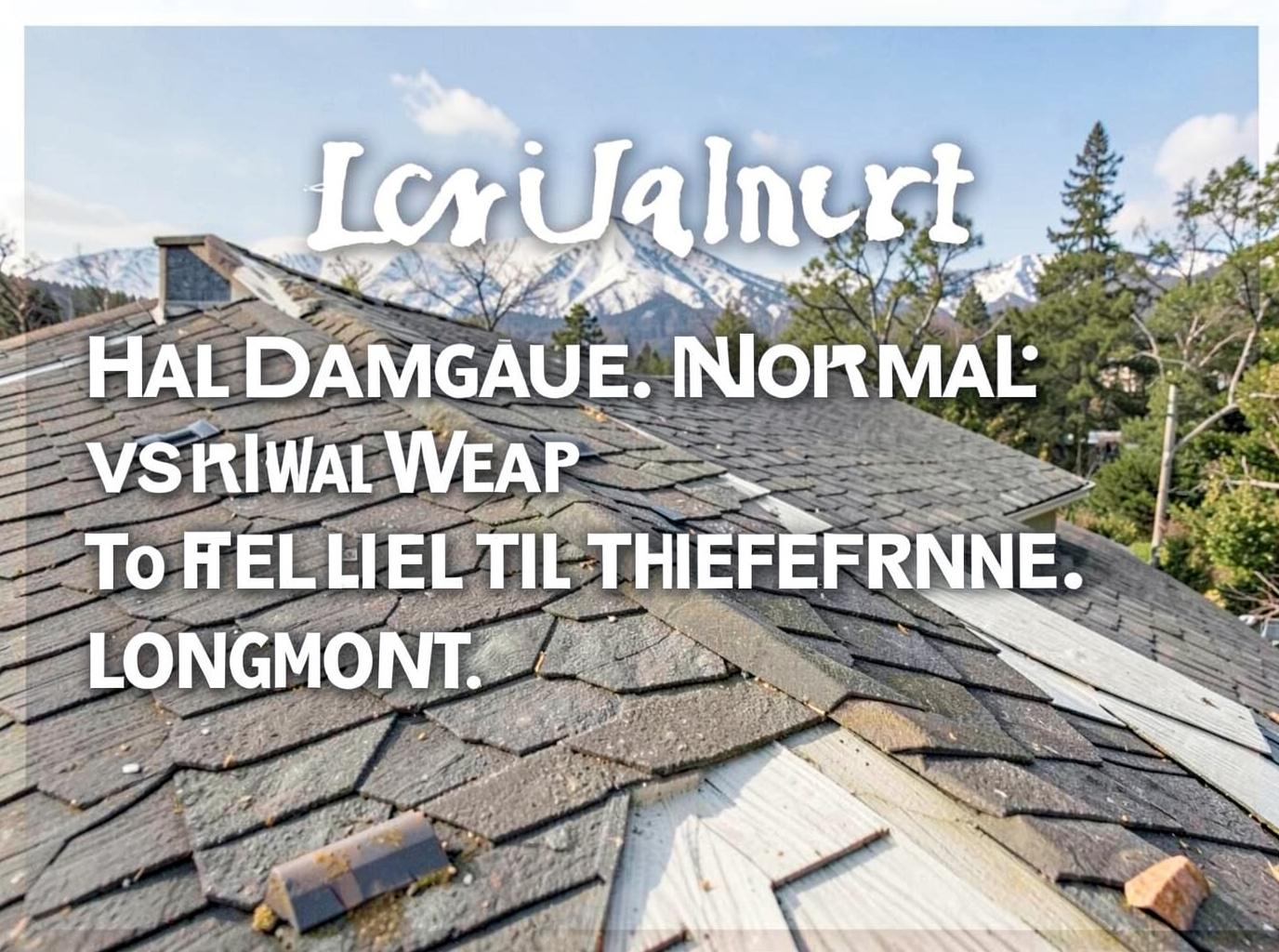
Hail damage appears as scattered circular spots of missing granules with underlying mat fractures, whereas normal wear produces even thinning across the entire roof surface after 15–20 years of exposure to Longmont’s intense UV and winter snow loads.
Spotting Hail Impact Patterns
Hail damage leaves random clusters of dents, often 1–2 inches across, concentrated on south-facing slopes and ridges in neighborhoods like Old Town and Kensington. These impacts crack the shingle surface and dislodge granules in neat circles, exposing the fiberglass mat underneath. In contrast, normal wear shows consistent granule shedding along eaves and valleys from repeated foot traffic during inspections and from wind-driven dust. Longmont’s semi-arid summers accelerate UV degradation on asphalt shingles, but this creates a uniform graying rather than isolated craters. After a storm, check for bruised areas that feel soft when pressed; these spots often lead to leaks if moisture reaches the deck. Residents near Left Hand Creek report faster deterioration on lower pitches because runoff concentrates there during heavy spring melts.
Normal Aging in Boulder County Homes
Most homes in Downtown Longmont and Sunset were built between 1970 and 1990 with 3-tab shingles rated for 20–25 years. Normal wear begins with surface matting around year 12, followed by edge curling and loss of flexibility during cold snaps. Snowy winters add weight stress and ice expansion in micro-cracks, but this damage spreads evenly rather than in patches. Wind from Front Range gusts abrades the same slopes year after year, creating a sanded appearance instead of the pockmarked look of hail. Checking attic insulation for moisture stains helps differentiate: hail often causes isolated leaks, while age-related wear produces broader staining along nail lines.
Climate Factors That Speed Both Issues
Longmont’s warm summers and snowy winters create a cycle where UV embrittles shingles in July and August, then freeze-thaw cycles in December through March widen any existing micro-fractures. Hail events typically arrive with spring thunderstorms moving across Boulder County, while routine wear accumulates steadily from the 300+ days of sunshine. Homes near Roosevelt Park face extra wind exposure that polishes granules uniformly, making hail dents stand out more clearly. Metal flashings around chimneys and vents corrode faster in the dry air, but this appears as rust streaks rather than impact craters. Regular checks after each season reveal whether new damage matches storm dates or simply reflects cumulative exposure.
Practical Next Steps After Inspection
Measure any suspect areas and photograph them with a coin for scale; hail dents usually exceed the size of a quarter. If patterns appear random and recent, contact a local crew for Hail Damage Roof Repair before leaks develop. Documenting uniform granule loss across the field supports a full replacement discussion instead. Review the Longmont Seasonal Roof Maintenance Checklist to track changes year over year. When damage clusters near vents or pipes, Storm Damage Roof Repair crews can address flashing issues at the same time. Homeowners in Sunset and Kensington often schedule evaluations after April hail watches to separate storm claims from ongoing maintenance needs.